A few weeks ago I was reviewing some wines from Lidl. They sent me a few samples from their holiday collection to check out and I have one here to share with you.
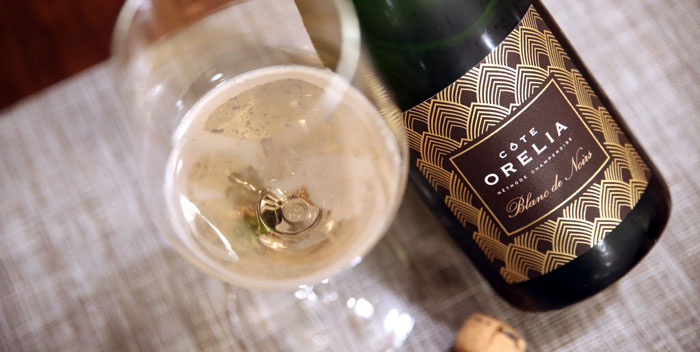
This one is a sparkling wine called Côte Orelia, Blanc de Noirs. In my opinion, no holiday should be celebrated without sparkling wine. It’s festive. It pairs well with food. And it’s delicious!
When you see the name of this wine you might think it’s a French wine, but this one is made in America. I did a little digging to try to find some background on this wine but I couldn’t find much. It appears as though this wine is made exclusively for Lidl. The only mention I could find of this wine online is on Lidl’s website. And when I try to find any info about Côte Orelia I can’t find a winery operating under that name but I do find a trademark filing from Precept Brands, filed just a couple months ago, to use the name. Precept is a privately-owned wine producer based in Seattle, Washington.
The back of the bottle says this wine was produced and bottled by Côte Orelia Cellars, Albuquerque, New Mexico. I cannot find a Cote Orelia Cellars in Albuquerque but Gruet, which is owned by Precept, does produce sparkling wine in Albuquerque. So, I think I’ve connected the dots regarding where this wine originated.
Another thing I don’t know for certain is exactly which grapes were used in this wine. As a “blanc de noirs” it would be produced using red grapes. Typically a blanc de noir is made from pinot noir and/or pinot meunier. The fact that they include the “s” at the end of noir suggests multiple grape varieties used. If this is consistent with other Gruet-produced blanc de noirs it would be pinot noir and chardonnay.
You might be wondering why the wine isn’t red if it’s made from red grapes. Blanc de noir translates to “white from black.” The red color of a red wine made from these grapes comes from the skin. In the case of a blanc de noir the grapes are pressed gently to keep the color from getting into the juice. You will notice a slight copper tint to the color, which differs from the straw color a blanc de blancs would have.
In terms of taste, a blanc de noir tends to have a fuller body and is not quite as dry as a blanc de blanc.
This one is produced using the traditional method where carbonization of the wine is achieved through a secondary fermentation in the bottle. This is versus the less expensive charmat method used for Prosecco.
Although Lidl hasn’t let me down with the quality of their wines yet, I have to admit I was skeptical before tasting this wine. There was just so much mystery about the wine that I was suspicious. But the taste did not let me down. This is a nice sparkler for the price.
Toasted almonds, pear, yeast and yellow delicious apple aromas give this wine a pleasant and interesting nose. The palate delivers much of the same: pear, yellow delicious, yeast and nutty flavors. There’s also a bit of saltiness. It has a moderately bubbly mouthfeel, which is nice but I would like a little more creaminess. The acidity is bright and mouthwatering. The finish is super long with salted pear flavors.
Once again, Lidl comes through with a fantastic bargain.
Wine: Côte Orelia, Blanc de Noirs
Varieties: Assumed to be pinot noir and chardonnay
Vintage: Non-vintage
Alcohol: 12.5%
Rating: 88
Price: $11.99
Disclosure: This wine was provided as a media sample.
One of the tricks to being a wine bargain hunter is to know where to shop in order to find good bargain wines. Many people tout Trader Joe’s as the place to go for good cheap wine. I’ve actually been rather critical of some of my finds there in the past. I’ve also previously written about wines at Aldi, which has roots connected to Trader Joe’s. And now there’s a new player on the scene offering discount wines at a grocery store, Lidl.
Lidl is a European-based grocery chain that started opening stores in the US earlier this year. Right now I think they’re only in South Carolina, North Carolina, Virginia and Delaware in the US.
In order to develop a strong wine program, they’ve had their selections all picked by Master of Wine, Adam Lapierre. Now you might thing that a Master of Wine would be a snob and pick a bunch of expensive wines, but you would be wrong. One of the goals Lidl had with their wine program was to pick good wines they could sell at bargain prices. Now that’s music to my ears.
But upon learning this, I was still suspicious. I can’t believe their claims until I try their wines. So try I did, at least this one (perhaps more to come).
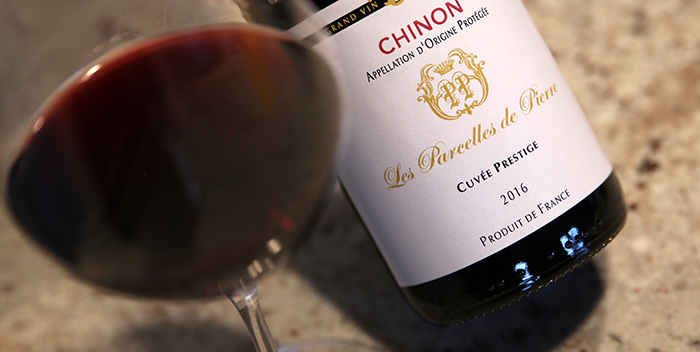
The first Lidl wine I tried is a Chinon, from the Loire Valley in France. It is bottled under the label “Les Parcelles de Pierre,” which I couldn’t find any record of anywhere other than with Lidl — which makes me think it’s a private label wine created for Lidl. I’m not 100% sure of that, but Google couldn’t tell me otherwise.
Regardless, this wine did not disappoint.
Herbs, violets, berries and spices is the best way to describe the nose of this wine. It has nice complexity and character. On the palate this is a light-bodied red wine, typical of the region, offering bright raspberry, cherry and spice flavors. The mouthfeel is good, although could be a little more silky. The acidity is gives a nice vibrancy to the wine. It finishes with long-lingering cherry flavors.
Oh, and did I mention the price??? It’s under ten bucks! Now that’s a bargain wine!
Wine: Les Parcelles de Pierre, Cuvée Prestige, Chinon
Variety: Cabernet franc
Vintage: 2016
Alcohol: 13%
Rating: 86
Price: $8.99
Disclosure: This wine was received as a media sample.
When it comes to sauvignon blanc, I tend to gravitate toward two regions — New Zealand and Chile. Both tend to produce very bold, tropical sauvignon blanc.
And when it comes to value, Chilean sauvignon blanc is hard to beat.
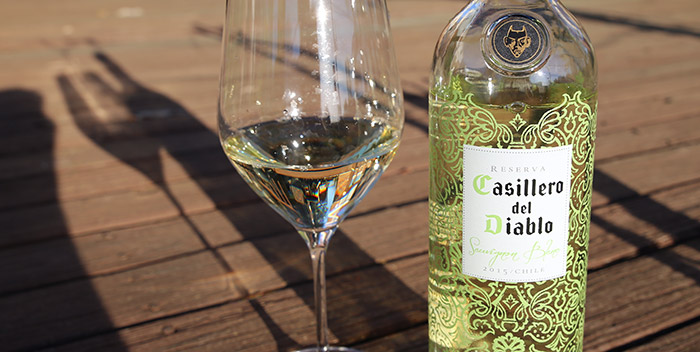
The designation on this one from Casillero del Diablo is just Chile, meaning the grapes could come from different parts of Chile and it doesn’t have one specific appellation. This isn’t uncommon for bargain-priced wines that are produced in large quantities. Nonetheless, Concha y Toro put out a good product in this one.
The aromas are intense on this wine, delivering fresh cut grass, grapefruit, melon and wet stone fragrances. The palate is equally intense, with loads of grapefruit, granny smith apple and gooseberry flavors. It’s quite tart with acidity that’s through the roof. The mouthfeel is decent. It finishes with tangy citrus and salt flavors.
If you like a sauvignon blanc that’s unapologetically intense, you’ll dig this one.
Wine: Concha y Toro, Casillero del Diablo, Sauvignon Blanc
Variety: Sauvignon blanc
Vintage: 2015
Alcohol: 13%
Rating: 86
Price: $10.00
Disclosure: This wine was received as a media sample.
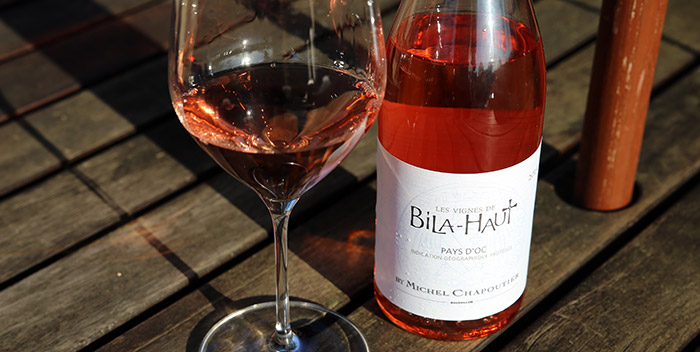
This is not the first vintage of this wine I’ve reviewed. A couple years ago I reviewed the 2013 vintage, which was quite tasty. And in general I’ve found wines from Michel Chapoutier to be consistently good.
This wine come from southern France and more specifically the Languedoc-Roussillon region. As a guy who seeks out great wines at reasonable prices this happens to be one of my favorite regions. I particularly seek out rosé or vibrant white wines from this region, like Picpoul de Pinet.
The nose is light and pleasant, offering soft peach, mango, floral and mineral aromas. The palate has a really soft mouthfeel as well as soft flavors such as peach, melon, a touch of apple, a touch of lemon and a dash of salt. The acidity is sufficient, although I would have liked just a wee bit more vibrancy. It finishes fairly long with tangy citrus flavors. Overall, it’s a tasty rose.
Wine: Michel Chapoutier, Bila-Haut, Pays d’Oc IGP
Variety: Grenache and cinsault
Vintage: 2015
Alcohol: 13%
Rating: 87
Price: $12.99
Disclosure: This wine was received as a sample.
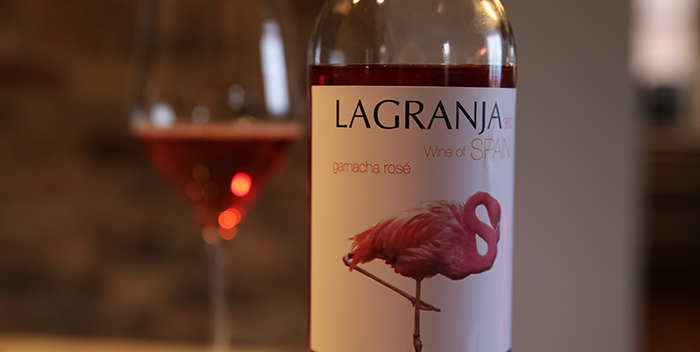
Every year I find myself loving rosé more and more. At its best it’s a light, refreshing wine with floral, mineral, fruit and spice characteristics with vibrant acidity and and a smooth mouthfeel. And some of the best rosés I’ve tasted have been made from grenache, as this one is.
At one time a few years ago I had read that grenache is the most widely planted grape in the world. I don’t know if that’s still the case, but it is definitely grown extensively. Many wines from France, particularly in the Rhone region are made with grenache and it’s a popular grape in Spain too, where they call it garnacha.
While it’s often used to produce red wines, it’s very common in rosé. This one comes from the Cariñena DO, which is one of the oldest protected wine growing areas in Europe.
The nose of this wine is delightful, offering soft floral aromas layered with wet stone, peach, strawberry and citrus aromas. The palate is also quite nice, delivering peach and berry along with wet stone mineral flavors. The acidity is sufficient and the mouthfeel is pleasant. The finish is tasty also fairly short.
Overall, it’s a pretty tasty wine and is and is an exceptional Trader Joe’s bargain.
Wine: La Granja Garnacha Rosé
Variety: Grenache
Vintage: 2015
Alcohol: 13.5%
Rating: 85
Price: $4.99
Disclosure: This wine was received as a media sample.
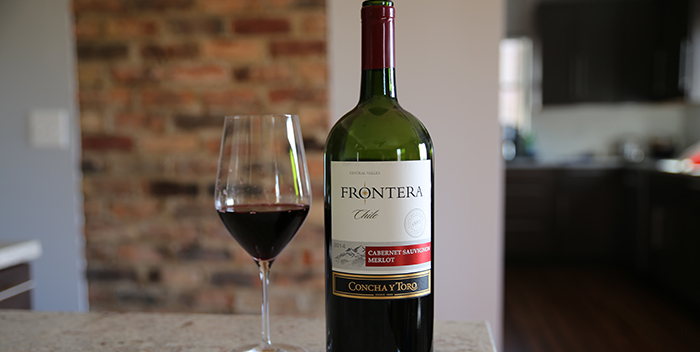
I’m a fan of the magnum, that’s a 1.5 liter bottle of wine. Although the magnum also frustrates me because it seems like the wines sold in bottles of this size fall primarily into two camps: 1) super cheap & not so great, and 2) premium.
What I have a hard time finding in the magnum size are exceptional value wines. Those wines that are pretty darn good, age well (because I like aging wine in large format bottles) and are still bargain priced.
This Chilean Cabernet Sauvignon / Merlot from Frontera falls into bucket #1 — a super cheap and not so great wine. And when I say “not so great” I don’t mean it has to go down the drain. I mean there’s nothing too exciting about this wine, it’s a bit out of balance, over-spiced and has vegetal, underripe characteristics. But in a pinch I’d still drink it.
Now, I’m not big on negative reviews. After all, I’ve found that readers come here to find recommendations on what they should buy, not what they shouldn’t buy. And while some wine bloggers seem to think writing negative reviews prove their credibility, I couldn’t care less about that.
So, why the hell am I writing about this wine? I guess to address what is good about a wine like this. It does, after all, have some wine-like qualities. And what do you expect when you pay $12 or less for a magnum???
For a super cheap wine, this is drinkable. On the nose it offers sour cherry, green pepper, herbs and heavy baking spices. The palate brings sour cherry and plum flavors that will make you pucker. But let’s not pretend there’s anything elegant about this wine.
If you’re looking to stretch your dollars, it might work for you. My inclination is to use a wine like this for making sangria, where you can augment the flavor by adding other fruits, sugar and brandy. You could also use it for making braised short ribs, beef burgundy or coq au vin.
Wine: Frontera
Variety: Cabernet sauvignon / merlot blend
Vintage: 2014
Alcohol: 12.5%
Rating: 70
Price: $12.00 (for a 1.5 liter bottle)
Disclosure: This wine was received as a media sample.
A few weeks ago I wrote about a pinot noir from Mud House made with grapes from the Central Otago region in New Zealand. It was delicious and reminded me about how good New Zealand pinot noir can me. And now I have another pinot noir from Mud House, this one from grapes grown in the Wairau valley in the Marlborough region of New Zealand. It too is delicious.
Bright raspberry and cherry aromas coupled with spices like cedar and black pepper, give a nice nose to the wine. Although I’d say it’s only moderate in intensity. The palate is a similar story, offering ripe cherry, raspberry and strawberry flavors along with a touch of spice — all with moderate concentration. It has good acidity and a good mouthfeel. It finishes long and fruity. It’s not quite as lively as their Central Otago pinot noir, yet it’s still pretty tasty.
Wine: Mud House, Marlborough Pinot Noir
Varieties: Pinot Noir
Vintage: 2013
Alcohol: 14%
Rating: 88
Average price: $16.99
Disclosure: This wine was received as a media sample.
Find Mud House, Marlborough Pinot Noir with Snooth
I was talking with a friend the other day about the descriptors people use for wine and he was amused by “grass” as an aroma in wine. And while it may strike some as funny, it’s a very real thing.
Sauvignon blanc often demonstrates this grassy aroma and it comes from some very specific chemicals. If you’re interested you can google the names of those chemicals, but unless you’re a scientist I assure you those names will be meaningless to you.
I do like a little bit of grassiness to sauvignon blanc, but not too much. Like many sauvignon blancs from New Zealand, this one from Mud House certainly has a good bit of it.
Cut grass and green pepper dominate the nose of this wine, although it also reveals some grapefruit and pineapple aromas. The palate is tangy, offering grapefruit, lemon, granny smith apple and salty minerals. The acidity is good and the mouthfeel is crisp. It finishes with salty citrus flavors.
Wine: Mud House, Sauvignon Blanc
Varieties: Sauvignon blanc
Vintage: 2014
Alcohol: 13%
Rating: 86
Average price: $12.00
Disclosure: This wine was received as a media sample.
Find Mud House, Sauvignon Blanc with Snooth
Zinfandel is often the epitome of a “new world” wine. It’s famous for being bold, spicy and loaded with big fruit flavors. Some love it for those reasons and some avoid it for those reasons. If you’re a zinfandel lover who likes big, fruity wines this is a nice one for you.
The OZV brand comes from Oak Ridge Winery in Lodi, California — which is considered by many to be the region of origin for some of the best zinfandel on the planet.
The fruit aromas, laced with spice, jump out of this wine, offering cherry cola, vanilla, raspberry and strawberry fragrances. It’s a little sweet on the palate, delivering abundant ripe raspberry, strawberry and chocolate flavors. It’s like the liquid form of fancy chocolates. The acidity is sufficient and the mouthfeel is nice. It finishes with lingering sweet fruit and chocolate flavors.
Wine: OZV, Old Vine Zinfandel
Varieties: Zinfandel, petite sirah
Vintage: 2013
Alcohol: 13.95%
Rating: 85
Average price: $12.00
Disclosure: This wine was received as a media sample.
Find OZV, Old Vine Zinfandel with Snooth
I admit it. I’ve often typecast New Zealand as offering only sauvignon blanc when it comes to wine. But there’s no basis for that, other than the fact that they produce some excellent sauvignon blanc and that just happens to be what I think of when I think about New Zealand. Plenty of other good wines are produced there too, such as pinot noir.
This Mud House pinot noir comes from the Central Otago region of New Zealand — a region where pinot noir is the most planted vine. It is one of the southern-most wine growing regions within New Zealand and they’ve been producing pinot noir there since the 19th century.
Cherry, raspberry, toasted oak and a touch of nutmeg make up the aromatics on this wine. The palate brings well-balanced raspberry, cherry and spice flavors with a nice, silky mouthfeel. The acidity is spot on. This is a lively pinot noir with fresh fruit flavors and good vibrancy. Simply put, it’s delicious!
The producers suggest it will age well for five to six years, but in my opinion it’s fantastic to drink right now.
Wine: Mud House, Central Otago Pinot Noir
Varieties: Pinot Noir
Vintage: 2014
Alcohol: 13.5%
Rating: 91
Average price: $19.99
Disclosure: This wine was received as a media sample.
Find Mud House, Central Otago Pinot Noir with Snooth
123102030...82Next  Page 1 of 82